Deal flow lives in the inbox
A broker emails a submission, a borrower texts back numbers, and the deal exists only as a thread one person can see — no record, no stage, no owner until someone manually keys it somewhere.

Who it's for
We start with the operational layer around the regulated core: public presence and credibility, inbound deal and borrower intake, a clear deal pipeline and CRM, follow-up, and investor/referral tracking. Underwriting, servicing, and borrower financial data stay out of scope until a compliance posture is explicitly scoped.
Signals
AI in this sector
Graph layer: Merchant → funder → broker → deal trees track deal velocity across the relationship graph — which brokers close fastest with which funders, where deals stall, and which merchant segments convert most reliably. The graph makes the invisible broker network visible.
Go deeper: Graph Intelligence · OpenClaw co-pilot
The problem
A broker emails a submission, a borrower texts back numbers, and the deal exists only as a thread one person can see — no record, no stage, no owner until someone manually keys it somewhere.
You can't see which brokers send clean files that fund versus which flood you with junk submissions, because nothing tracks submission-to-funded by source — so you keep paying attention to the loudest broker, not the best one.
A deal waiting on bank statements or a signed term sheet sits silently — no one owns the chase, the borrower goes cold, and the broker re-shops the file to another funder while you assume it's still alive.
LPs, participation partners, and referral sources get updated by ad-hoc email or a quarterly spreadsheet pull, so the people funding or feeding you deals have no consistent window into what you're working.
A merchant who paid off clean is your best next deal, but there's no trigger when they're due to re-up — so they get a cold call from a competitor before anyone on your side reaches out.
To answer 'what's in the pipeline, what's stuck, and who closes fastest' you're pulling numbers by hand from email, a CRM nobody updates, and a spreadsheet — there's no single console that already knows.
Your stack today
A typical private-lending or MCA shop runs a stack of rented and manual tools stitched together by hand — here is what each job usually runs on, and the owned surface that absorbs it.
Capabilities
Merchant-funder-broker-deal trees: tracks deal velocity, broker relationships, and funder network depth so the team sees the full deal graph, not just individual records.
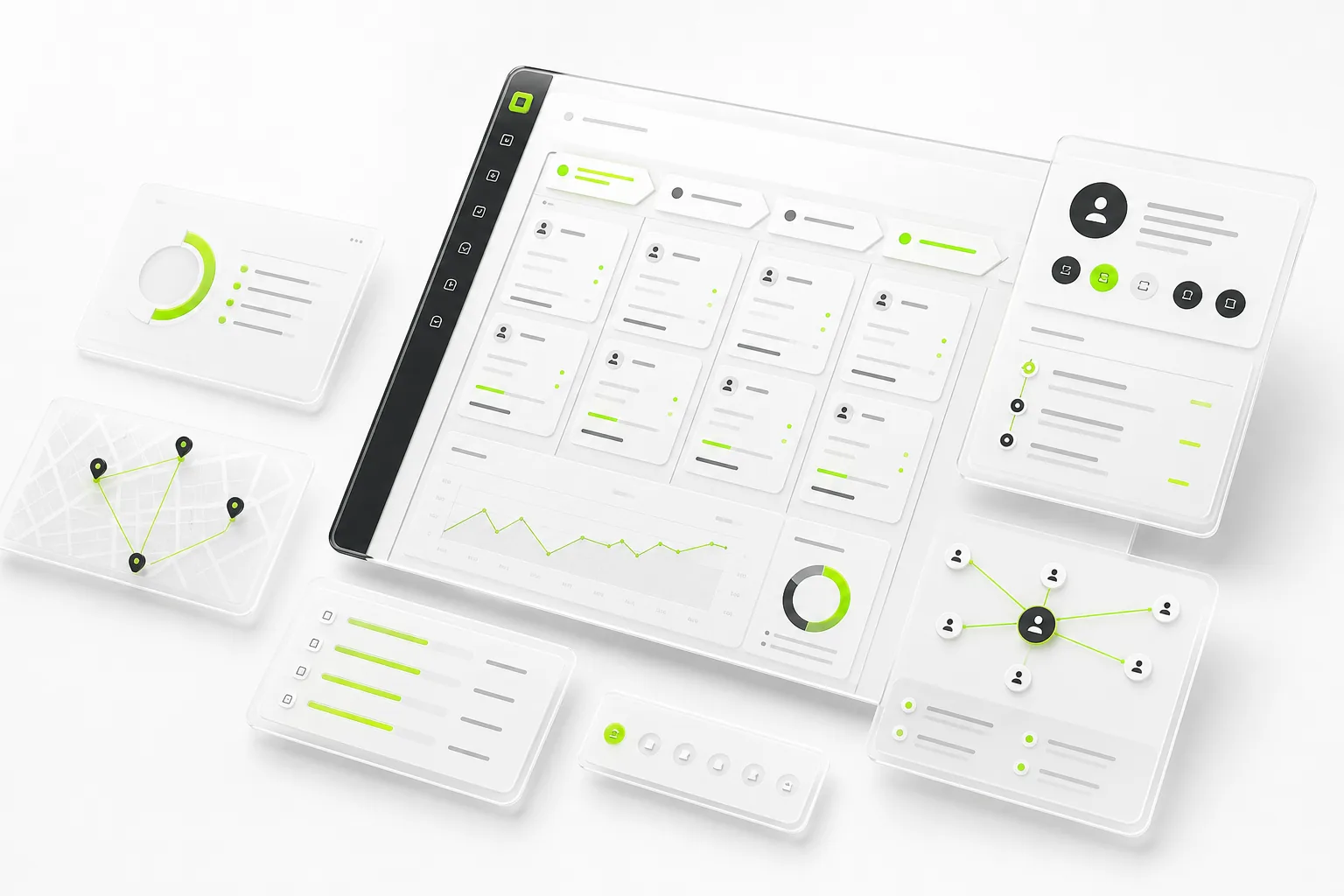
Deal-flow pipeline with stages from inquiry to funded or declined; unified borrower, broker, and investor tracking across the portfolio.
Deal memo drafts, follow-up sequences, and internal Q&A — the assistant operates inside the console with the operator in the loop at every step.
In practice
A broker email, ISO PDF, or web inquiry is captured into a new deal record with the source broker, borrower, and requested amount attached — no manual re-keying, nothing living only in one inbox.
The deal opens at the inquiry stage with a named owner and a first-touch task, so a submission becomes a tracked thing on a board instead of a thread someone might forget.
The co-pilot drafts a borrower summary and a first follow-up from the deal record — the operator reviews and sends, keeping every numeric and qualifying detail in human hands inside the regulated boundary.
While the deal sits in review awaiting stips or a signed term sheet, automation flags it as stalled and reassigns the chase, so nothing goes silent and the broker has no reason to re-shop the file.
Funded, declined, or follow-up — the result writes back to the borrower → broker → deal tree, so the next submission from that broker arrives with history attached and source performance updates itself.
A clean payoff sets a renewal trigger for that borrower, and capital partners get a consistent update from the owned email layer — repeat business and investor visibility run on rails instead of memory.
Before / after
A broker submission lives in one person's email thread
Every submission enters a tracked deal record with a source and an owner
Broker quality is judged by who emails the most
Submission-to-funded by broker is visible on the relationship graph
Deals waiting on stips go silent until they're cold
Stalled deals and missing conditions surface with the chase assigned to someone
Investors and referral sources get ad-hoc, inconsistent updates
Capital partners run on a consistent owned email cadence tied to the pipeline
Answering 'what's in the book' means rebuilding a spreadsheet by hand
An owner console already shows pipeline, velocity, and source performance
How the work varies
Deal, borrower, broker, investor, and referral intake separated from regulated underwriting work.
Deal-flow CRM with stages from inquiry to review, funded, declined, or follow-up.
Investor/referral follow-up and owner visibility without touching protected financial decisioning.
First build
Start with deal intake, pipeline visibility, and relationship follow-up around the regulated core, not inside underwriting or servicing.
Guardrail
Do not imply lending compliance, underwriting automation, servicing, borrower financial-data handling, or regulated decisioning unless separately scoped.
FAQ
Start with deal intake, pipeline visibility, and relationship follow-up around the regulated core, not inside underwriting or servicing.
Do not imply lending compliance, underwriting automation, servicing, borrower financial-data handling, or regulated decisioning unless separately scoped.
The owner gets one clean view of leads, work, and follow-up instead of piecing it together from memory and spreadsheets.
Ownership means portable data, exportable configuration, clear exit rights, and client-specific workflow IP. For managed cloud clients that is the model; literal infrastructure ownership is the self-host deployment case. Either way the operating layer is branded to your business, not rented from a vendor.
No. The build is the operational layer around your regulated core — deal and broker intake, pipeline visibility, follow-up, and investor/referral tracking. Underwriting logic, servicing, credit decisioning, and borrower financial-data handling stay out of scope unless a compliance posture is separately scoped with you.
It can absorb the deal-flow and relationship side into one owned console, or sit alongside the system you keep. The point is a single branded surface you control for intake, pipeline, and follow-up — not another rented seat you rent and never fully own.
OpenClaw works on the operational record — drafting borrower summaries, follow-up sequences, and answering pipeline questions like which deals are stalled. It drafts; the operator reviews and decides. It does not make lending decisions, run underwriting, or touch regulated decisioning.
Borrower → broker → ISO → investor trees that make your deal network visible: which brokers send files that fund, where deals stall by stage and source, which borrower segments come back to renew, and which referral sources actually feed the book.
Next step
The consultation starts with your current public presence, intake, CRM, follow-up, software stack, and owner visibility. From there, the Business OS Diagnostic shows what to keep, replace, or connect first.